Owning the platform can be as valuable as owning the product.

The Candle Store

The Candle Store isn't the story of an online candle shop. It's the story of building a digital business that owned its customer experience, operational workflows and intellectual property from day one.

Many growing retail brands begin with off-the-shelf e-commerce platforms. They are quick to launch, but they often impose limits on experience, scalability and ownership as the business evolves.

The Candle Store chose a different path. Rather than adapting its business to fit an existing platform, it invested in creating one that reflected its own vision: a lightweight marketplace that combined customer experience, vendor management and operational control in a single digital ecosystem.

This Product Story explores why building the right platform can become a long-term strategic asset for an emerging brand.

The Candle Store marketplace

The Opportunity

Launching an online store has never been easier. Building a business that owns its customer experience is much harder. The Candle Store wanted more than a storefront: it needed a platform that could support customers, vendors and internal operations without depending on the limits of third-party marketplaces.

The opportunity wasn't to build another e-commerce website. It was to build the business's digital foundation.

The Candle Store customer journey

Understanding the Problem

Research focused on understanding every participant in the marketplace. Customers wanted a beautiful shopping experience, vendors needed simple inventory management, and administrators required visibility across products, orders and performance.

Rather than solving these needs independently, the product was designed as a connected ecosystem in which every participant benefited from the same platform.

The Candle Store user personas

Defining the Product

The platform was designed around ownership. Every decision balanced simplicity for users with flexibility for the business, and customer experiences, vendor operations and administrative workflows were brought together in a single architecture that could evolve alongside the brand.

The objective wasn't simply to launch quickly. It was to avoid rebuilding later.

The Candle Store information architecture

Designing the Experience

The experience extended beyond shopping. Customers could browse products, manage purchases and track orders through an intuitive digital journey, while vendors managed products, inventory and sales through dedicated tools built for their needs.

Behind the scenes, administrators gained visibility across the whole marketplace through dashboards designed to simplify operations rather than add complexity. Every part of the experience was designed to support the others.

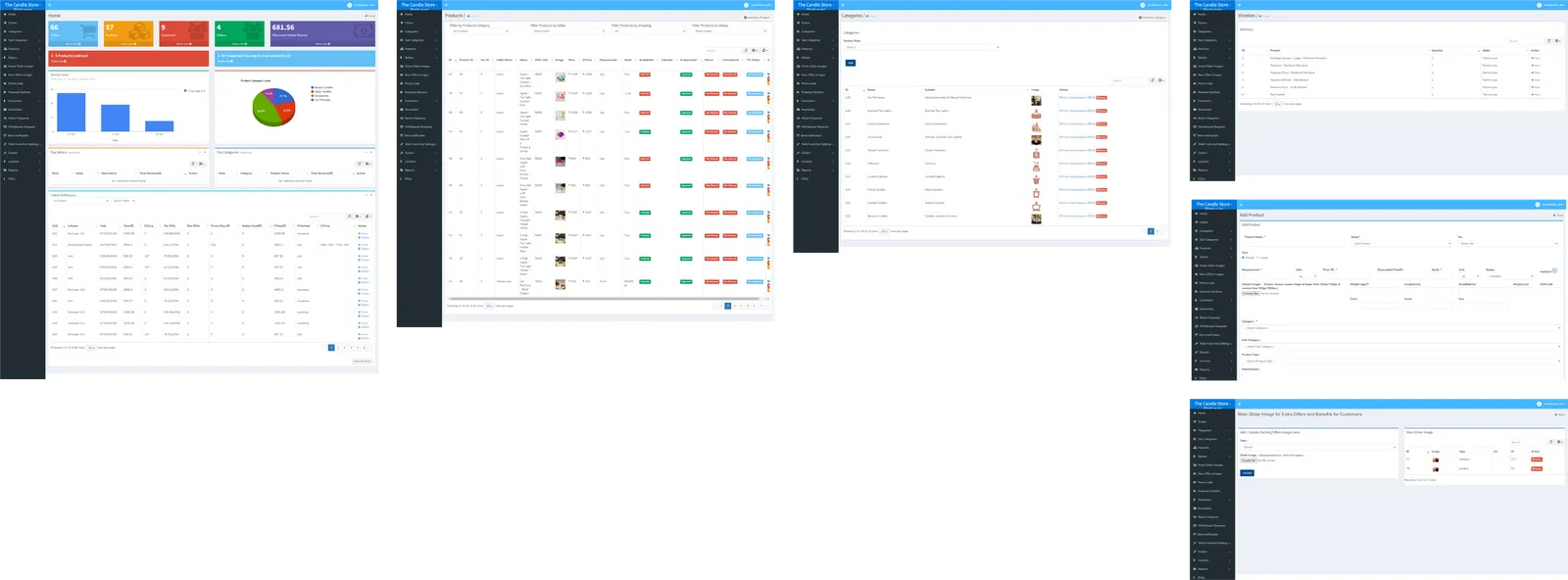
The Candle Store admin dashboard
Administrative dashboards for products, orders and marketplace performance.
The Candle Store shopping experience
The customer-facing shopping experience across browse, purchase and fulfilment.
The Candle Store seller tools
Vendor tools for inventory, listings and sales management.

Building the Identity

The product experience reflected the same qualities as the brand itself: warmth, simplicity and craftsmanship. Rather than overwhelming customers with functionality, it allowed the products to remain the hero while the platform quietly supported discovery, purchasing and fulfilment.

The words explained the promise, and the experience delivered it.

The Candle Store brand identity

Outcome

The Candle Store established a fully custom digital marketplace designed around ownership rather than platform dependency. Customers, vendors and administrators all operated within a unified ecosystem that reduced operational friction while giving the business complete control over its customer experience and digital assets.

Although the venture ultimately did not continue commercially, the project remains an important example of how thoughtful product strategy can create a scalable digital foundation for emerging consumer brands.

The Candle Store completed marketplace

Lessons

Not every startup succeeds, but every product teaches something. The Candle Store reinforced an important lesson: the value of a digital platform extends beyond the products it sells. When businesses own their technology, customer experience and operational workflows, they have the flexibility to evolve without being constrained by the tools they started with.

Products and markets may change. A well-designed platform gives businesses the freedom to change with them.

The platform shouldn't limit the business. It should grow with it.

Facing a similar challenge?